Ever open a game, tell yourself you’ll “just practice for a bit,” and then two hours later you feel drained? You might be chasing improvement, but the plan turns into pressure. That’s how burnout sneaks in.
Most players don’t struggle because they lack talent. They struggle because practice turns into too much at once. Too many modes. Too many matches. Too many goals. Then your brain resists the next session.
The good news is you can practice without feeling swamped. The trick is intentional play: fewer games, clear session goals, and simple feedback. In 2026, more gamers are using short training blocks and AI-supported tools to stay focused instead of grinding blindly. At the same time, there’s a growing push for recovery, sleep, and load control, like you’d see in sports.
In the sections below, you’ll learn a clean system you can start this week. It’ll help you practice with less stress and more fun, even if life gets busy.
Shift to Intentional Play So Practice Feels Like Playtime
Practice feels heavy when it looks like homework. Intentional play flips that. Instead of chasing every skill every day, you pick a small focus and give it your full attention.
Start by limiting your game mix. In 2026, many competitive habits point to deep focus over constant switching. Instead of hopping across everything, keep your routine to 2 or 3 games. One main game, one comfort game, and one challenge game. That alone reduces mental load, because you stop re-learning the same setup over and over.
Think of it like cooking. If you try five new recipes in one night, you end up stressed and undercooked. If you pick one dish and nail the technique, you improve fast and still enjoy dinner.
Here’s what intentional play looks like in real time:
- You start with a clear reason to play.
- You stay present during the session.
- You stop when the goal is done, not when time runs out.
Also, modern esports training culture puts more weight on mental readiness. That means you treat your session like a performance block. You don’t just “queue up and hope.”
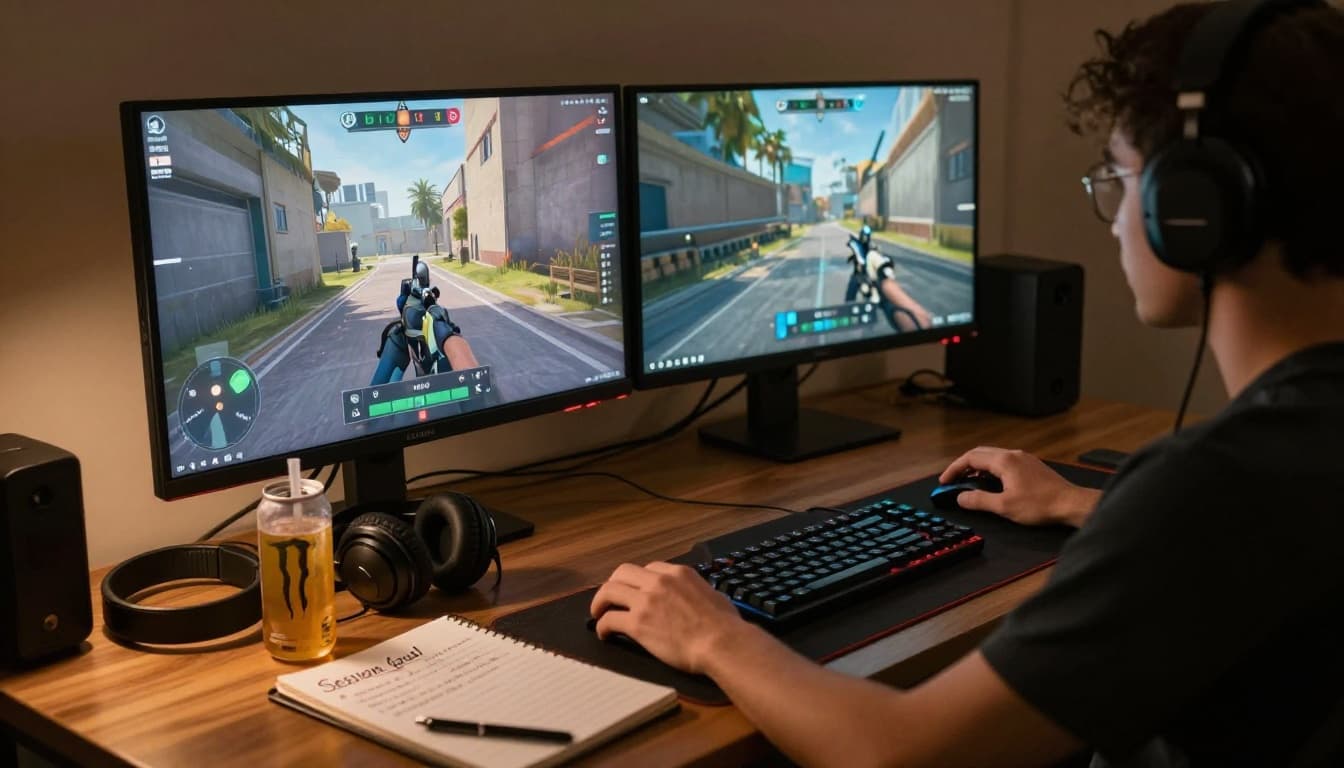
A solid pre-session setup helps your brain lock in faster.
Pick Just a Handful of Games to Master
If you feel overwhelmed, you likely spread your attention too thin. You might play your “main” for one match, then jump to a different mode, then try a different game to “warm up.” It feels productive. It isn’t.
Instead, pick:
- One main game (where you want real improvement)
- One comfort game (where you play without stress)
- One challenge game (where you test your limits)
For example, you could choose Valorant as your main. For comfort, you might play Animal Crossing to relax after work. For challenge, you could pick a harder queue type or a different role you rarely practice.
This setup matters because each game demands different mental skills. Your aim mechanics are not your positioning instincts. Your menu knowledge is not your matchup awareness. When you rotate too often, your brain never fully warms up.
Also, constant switching creates scope creep. One session turns into “just a little of everything.” Then you’re stuck restarting your focus each time.
A simple rule helps: if a game doesn’t support one of the three roles, it doesn’t belong in that practice day. You can still play it later. Just don’t let it hijack your training.
Build a Quick Pre-Game Ritual for Laser Focus
You don’t need a long routine. You need one that tells your brain, “This session has a job.”
Before you start, do a 2-minute ritual:
- Write a one-line goal (for example, “Improve aim under pressure”).
- Set up your space so you can’t get distracted.
- Choose the first activity that matches the goal.
Keep it small. One goal is enough. If you write five goals, you’ve already lost.
Then remove friction. Put your phone down. Start the headset. Grab water. If you use a notebook, keep it open so the goal stays visible.
This is where intentional play becomes real. You aren’t running a checklist. You’re sinking into the game with a clear purpose.
Here’s a practical example. Suppose your goal is map learning in a shooter. You don’t need 10 matches. You need a focused route practice:
- One warm-up.
- One targeted route run.
- One review moment.
- Stop.
Short, focused sessions prevent the “I’ll just play longer” trap. You also avoid that scattered feeling where you finish and think, “Did I learn anything?”
When you consistently do a ritual, you start to trust practice again. That trust reduces overwhelm. It also makes you more willing to start the next session.
Set Up Easy Schedules and Tools That Fit Your Real Life
A schedule won’t help if it’s too strict. Also, it won’t help if it expects marathon energy every day.
Instead, build an easy rhythm. Think “short blocks” over “one big grind.” Many gamers burn out when they treat practice like a full-time job. Your real life is not a tournament schedule.
A good 2026-friendly approach is to play in 45 to 90 minute sessions. That time window fits most workdays. It also keeps your brain alert. If you want more, you add another block after real rest.
You also want tools, but only simple ones. Overwhelmed players often use too many apps, too many tabs, and too many charts. Then they feel like they’re studying instead of playing.
If you want a model for structured practice, look at how esports players build training routines. This guide on daily training routines of professional esports players shows how consistency beats randomness. You can borrow that structure without copying the intensity.
Just remember: your plan should support your life, not replace it.
Craft Short Sessions with Clear Goals
Your session goal should sound like something you can do in one sitting. Not “get better at the game.” Try something like:
- “Improve aim tracking in close range fights.”
- “Learn two new lanes and when to rotate.”
- “Make fewer mistakes when I’m low on health.”
Next, decide the ending before you start. When the goal is done, you stop. That prevents scope creep, which is one of the fastest ways to feel overwhelmed.
Also, take breaks that protect your hands and focus. Micro-breaks help. For example, after each match, pause for 20 to 40 seconds. Stand up if you can. Then start the next attempt.
If you want a healthier approach that still keeps the fun, this piece on healthier gaming habits without playing less fits right into the “short, smart sessions” mindset. It’s not about quitting games. It’s about training your habits.
One more thing, pay attention to your sleep. In esports and sports training, recovery drives performance. If you skip rest, you feel it in your reactions.
So, treat your practice like a workout:
- Warm up.
- Work on one skill.
- Cool down.
- Walk away.
When you do that, practice stops feeling endless.
Tap Into AI and Data for Smarter Practice
AI can reduce overwhelm when it helps you focus. It shouldn’t replace your effort.
In 2026, the trend is clear: AI tools and smarter practice modes aim to help players start faster, switch devices, and review performance more easily. Instead of forcing you to guess why you lost, these tools point at patterns you can train next.
You can find broader context on how AI is used in games here: AI tools for game development in 2026. Even if you don’t use these exact tools, the main idea matters. AI is making games and training systems more responsive to what you do.
For practice, you want data that’s simple:
- Win/loss patterns by mode or situation
- Your most common deaths (if the game provides it)
- Replay moments that repeat
If you use replays, watch just one thing per session. For example, don’t review everything in a match. Watch your positioning only. Then adjust that one element next time.
Also, you can use AI-assisted drills if your game supports them, or if you find a tool that turns replay clips into training suggestions. The key is the output. If it tells you a specific weakness and a small drill, it reduces overwhelm.
If it gives you 20 charts and 10 settings menus, ignore it. Overwhelm loves complexity.
Your goal is this: practice should feel like a guided set of reps, not a research project.
Track Progress Simply and Restart Without Frustration
Tracking isn’t about building a spreadsheet empire. It’s about keeping your progress visible when you’re tired.
When players feel overwhelmed, it’s often because they can’t tell if practice is working. That uncertainty creates stress. Simple tracking removes doubt.
Use a low-pressure approach:
- Write short notes.
- Keep one takeaway per session.
- Don’t chase perfect data.
Also, plan for resets. Everyone gets worse when they switch modes, roles, or strategies. That temporary dip feels discouraging. But it’s part of learning.
Instead of restarting your whole routine, restart with an easy win. Use “easy mode” or low-stakes settings to refresh the basics. Then build back up.
This keeps your momentum. It also keeps your emotions steady.
The goal isn’t to never fail. The goal is to fail fast, then learn, then move on.
Use a Notebook to Pick Up Right Where You Left Off
A notebook is your anti-overwhelm tool. Your brain forgets details quickly. So don’t rely on memory.
After each session, write three quick things:
- What you practiced
- One key moment (good or bad)
- What you’ll try next time
Keep it short. One to three lines is enough.
This matters when you stop for a day or two. You come back and think, “Where was I?” With notes, you don’t rebuild from scratch. You pick up instantly.
Also, notebook notes help you finish games. Many players feel overwhelmed by endless starts because they never “complete” their practice idea. When you track in a notebook, you can mark a skill as done. That gives your brain closure.
For example, if you practiced recoil control for three sessions, write “Recoil control reps done.” Then move to positioning. That shift is powerful. It tells you you’re progressing, not drifting.
Spot Patterns in Your Play to Level Up Fast
Patterns are the fastest route to improvement. You don’t need to notice every mistake. You need to notice the one that keeps showing up.
Start with a simple question: “What keeps costing me?” If you lose the same fight type, that’s your next drill. If you get caught rotating too late, train timing.
You can spot patterns without apps. Here’s a basic method:
- Pick one metric you can remember (like deaths per round, or missed shots in one range).
- Track it for a few sessions.
- Look for repeats.
In many strategy and action games, you’ll see repeat behavior. For example:
- You peek the same way.
- You use the same ability at the wrong time.
- You hold too long before rotating.
In 2026, a growing trend is personalization. Players focus on their own decision habits instead of copying pro routines blindly. That’s smart, because your weaknesses are unique.
So, train what you can actually fix. Then retest quickly. If your adjustment works, keep it. If it doesn’t, change just one thing.
This approach prevents overwhelm by keeping scope small. You always know what to do next.
Dodge These Sneaky Mistakes That Kill Your Practice Groove
Overwhelm usually comes from a few repeat mistakes. You might not notice them at first. Then practice starts feeling pointless.
Here are common traps and how to fix them:
- Frantic multi-game hopping: If you bounce across games all night, you reset your warm-up constantly. Stick to your main, comfort, and challenge plan.
- Scope creep: If you keep adding goals mid-session, your brain panics. Write one goal before you start, then stop when it’s done.
- Ignoring breaks: Your aim and focus drop when your body is tense. Take short pauses, and stretch your hands and wrists.
- Poor physical and mental care: Burnout is not just stress. It’s strain. For prevention ideas, this article on gaming burnout prevention from athlete lessons connects recovery and load control to gaming too.
- Team sync blind spots: If you play competitive with others, your practice should include communication. Plan quick callouts, then repeat with intent.
Also, define “done” early. “Done” means your goal is completed, not that you feel motivated. Motivation fades. Systems don’t.
Finally, finish one practice before starting the next. When you chain unfinished sessions, you carry stress into the next round.
If you want a small boost today, do this: pick one tip from above and apply it to your next session. Then stop when the goal is complete. You’ll feel the difference fast.
Conclusion
You came here because you want improvement without that heavy, drained feeling. The shift is simple: practice with intent, not chaos. Pick fewer games, set clear goals, and use short sessions that end when the job is done.
Then make progress visible with quick notes. Finally, avoid the sneaky traps like scope creep and “just one more match.” When you do that, practice starts to feel like play again.
This week, choose one strategy from above and try it in your next session. What will you practice first, and what’s your one-line goal? Share it, and keep the momentum going.