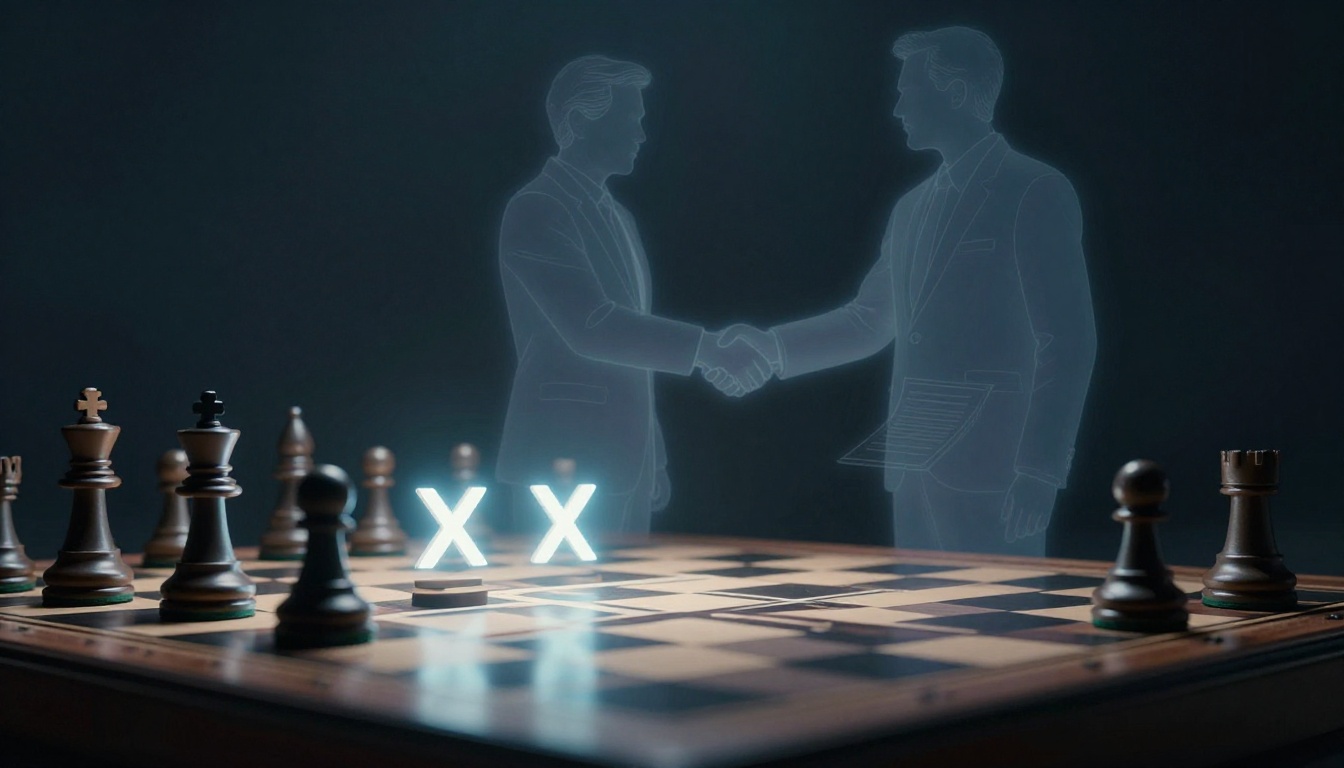
Ever watched a game turn on one move, then thought, “Wait, that’s a win already”? Picture a close tic-tac-toe round where someone needs one more turn. Then they suddenly get three in a row, and it’s over. The difference was knowing the winning condition before the board looked “dangerous.”
You face similar moments in real life. A deal looks fine, until you realize what “success” actually means. A meeting can feel busy, but the losing condition might be unclear goals and no follow-up.
This guide breaks down winning and losing conditions in plain language. You’ll learn clear definitions, see how they show up in chess and tic-tac-toe, understand the simple logic behind game theory, and use the ideas in negotiations and daily choices. Ready to spot wins before they happen?
What Winning and Losing Conditions Actually Mean
A winning condition is the goal that decides the outcome. In chess, it’s checkmate. In tic-tac-toe, it’s three in a row. In business, it might be “sign the contract” or “hit the monthly target.”
A losing condition is what makes success impossible, or what locks in a bad result. It can be a direct fail state, like losing your king in chess. It can also be a slow failure, like a plan that guarantees delays.
Most games boil down to a few common outcome styles:
- Win-lose: One side wins, the other side loses. The classic example is many board games.
- Win-win: Both sides improve. This often happens when you expand value instead of splitting a fixed pie.
- Lose-lose: Both sides end up worse. Miscommunication and rushed choices can create this fast.
Here’s a simple way to see the difference:
| Situation | Winning condition | Losing condition | Typical lesson |
|---|---|---|---|
| Win-lose | Reach your target first | Let the opponent reach theirs | Focus on your race track |
| Win-win | Reach mutual gains | Create a deadlock | Build shared goals |
| Lose-lose | No one gets what matters most | Both sides trigger the bad end | Slow down and clarify |
These patterns matter beyond games. Think about negotiations. If you define winning as “we each get the best deal,” you’ll chase win-win. If you define winning as “they lose,” you’ll often create lose-lose.
Also, winning and losing conditions can change during play. That’s why you should track them early, not after the damage.
Spot Wins and Losses in Classic Games Like Chess and Tic-Tac-Toe
Some people treat winning conditions like trivia. Real skill treats them like a map.
In chess, you’re not only trying to “attack.” You’re trying to reach a state where the opponent can’t avoid checkmate. Losing often looks like the moment your king runs out of safe squares. Also, games can end in other ways, like stalemate or resignation, which changes how you think about “winning” in the moment (How Chess Games Can End: 8 Ways Explained).
In tic-tac-toe, the winning condition is simpler and faster. You win by placing three X’s or three O’s in a row. Rows can be horizontal, vertical, or diagonal. If you don’t win before the board fills, you get a draw. A draw is still useful information, because it tells you your lines were blocked.
Here’s a quick comparison:
| Game | Win | Lose |
|---|---|---|
| Chess | Checkmate the king | Your king gets checkmated |
| Tic-tac-toe | Three in a row | Opponent gets three in a row (or you miss every chance) |
Now the key skill: spot the direction your opponent is aiming. Imagine this moment in tic-tac-toe: you see two X’s with an empty spot that completes a row. That’s a winning condition you must block. In chess, imagine you can trade pieces to remove their defense. That can turn a “maybe” into a real path to checkmate.
Try this habit in either game:
- Identify the win path you want.
- Identify the win path the opponent wants.
- Ask what ends the game next, not what sounds best.
As soon as you do that, “luck” shrinks. Decisions start to feel clearer.
Why Checkmate Seals the Deal in Chess
Checkmate is one of the cleanest winning conditions in any game. It doesn’t matter how many attacks you have. It matters whether the opponent’s king has an escape.
Here’s a simple, step-by-step play-by-play.
- Imagine it’s your move. You notice the black king has fewer squares than before.
- You move a piece that also controls one escape square.
- Now the king still has a few squares, but every square is controlled by something you own.
- Black tries a capture, hoping your attacking piece is “free.”
- You respond by covering the escape squares again, and the capture doesn’t fix the problem.
At that point, the king is trapped. It has no legal move that avoids being in check. That’s the core of the winning condition.
However, checkmate doesn’t happen by accident. One overlooked move often removes your opponent’s last escape, or removes your own defense.
Here’s how a loss can start in one moment:
- You leave your king one square too open.
- Your opponent checks you.
- You respond, but your response blocks your escape square instead of protecting it.
- Then your opponent delivers checkmate on the next move, because the king still has no safe square.
Planning ahead is the real cheat code. Not in a magical sense. More like this: you should constantly picture the end state you’re trying to create. In chess, that end state is checkmate, not “a big attack.”
Image: checkmate moment

The Thrill of Three in a Row in Tic-Tac-Toe
Tic-tac-toe feels quick. That’s why it teaches fast thinking about winning conditions.
You win by forming three. Two X’s alone don’t end the game. Two X’s plus one open spot does. The moment you spot “two in a row” with one empty space, you’ve found a near-term win condition.
Let’s use a simple board. Use this to imagine positions:
X | O | X
O | X | _
_ | _ | O
In this setup, focus on threats:
- X has two in the middle column? Not yet, but X is close to forming a row.
- O also has a pattern. If O completes a diagonal or column, O wins.
Now add the skill of blocking. When your opponent has a move that completes three in a row, you have a lose condition too. If you ignore it, the next turn ends the game. So your move either:
- Completes your own three, or
- Stops their three, even if it delays your dream line.
Also, remember draws. A draw is not “nothing.” It’s a sign both winning conditions were blocked well enough. If you reach many games that end in draws, that means your losing conditions are getting detected early.
Here’s a friendly rule of thumb:
- In tic-tac-toe, every turn is about either creating a threat or removing a threat.
If you want a mental picture, think of it like fencing. You’re not just swinging. You’re protecting your legs while you threaten the other side.
When you play that way, wins show up more often, and surprise losses shrink.
Game Theory Tricks to Predict Wins and Avoid Losses
Game theory is the study of choices where outcomes depend on other people’s choices. That’s it. It’s not magic math. It’s just a way to think.
The simplest lesson is that you can’t plan in a vacuum. Your “best” move depends on what the other person will do next.
A classic example is the prisoner’s dilemma. Imagine two people decide whether to cooperate or betray. If both cooperate, both do better. If both betray, both do worse. If one betrays while the other cooperates, the betrayer gains and the cooperator loses. You can read a plain explanation of the setup here: What Is the Prisoner’s Dilemma and How Does It Work?.
Now connect that to winning and losing conditions.
- In a win-lose mindset, you treat the other side’s win path as your loss.
- In a win-win mindset, you search for moves that help both.
- In a lose-lose mindset, you watch for triggers that guarantee failure for both sides.
A helpful way to think about “paths” is this:
- Your best chance at winning is often your clearest line to the winning condition.
- If you’re losing already, you still need a path, not a hope.
So if you’re behind, go all-in on the best route to a win condition. In chess that might mean creating one decisive check threat. In tic-tac-toe, it might mean focusing on completing a row instead of chasing a “nice” move that still loses.
Meanwhile, also ask: “What choice gives my opponent the easiest win?” That question often prevents a loss more than any clever tactic.
Bring It Home: Wins and Losses in Business, Negotiations, and Real Life
Games teach you to look for the finish line. Life does too, even when nobody announces it.
Here are three common patterns you’ll recognize fast:
- Business battles can become win-lose when a company defines success as taking value from others. It can work short-term, but it often creates long-term risk.
- Negotiations turn into lose-lose when each side protects pride more than outcomes. You can spot this when nobody agrees on the “winning condition.”
- Daily choices create lose-lose when short-term wins damage long-term trust. Think of it like renting a shortcut. It always costs later.
The good news: you can shift conditions. You don’t just “hope” for win-win. You design it.
Negotiation Wins That Benefit Everyone
Win-win negotiation isn’t about being nice. It’s about being clear on goals and trade-offs.
Use these steps to find shared wins:
- Name the winning condition for both sides in plain words.
- List what each side needs (not just what each side wants).
- Swap constraints for options, like timelines, scope, and risk.
- Agree on how you’ll measure success after you sign.
When you do this, you reduce lose-lose triggers. The talks stop feeling like a tug-of-war and start feeling like problem-solving.
If you want more practical tactics, the Program on Negotiation at Harvard Law School shares ideas for generating win-win outcomes in real scenarios, including concrete strategies like expanding the pie (5 Win-Win Negotiation Strategies).
Image: negotiation handshake

Business Moves That Turn Losses into Shared Success
In business, win-lose often shows up as “cheap now, pay later.” A product can feel like a win when it’s fast and low-cost. Yet it can lose future trust through poor quality or hidden costs.
A win-win shift usually looks like this:
- You identify shared risks.
- You build rules that reduce those risks for both sides.
- You choose methods that support long-term results.
For example, when companies treat sustainability as a long-term win condition, they usually change choices. They invest in safer supply chains. They design products that last longer. They reduce waste because waste is a loss condition, even if it’s not in the budget today.
Image: green tech trends

2026 Trends: Why Win-Win Is the New Path to Victory
In 2026, many leaders see the limits of pure win-lose. It creates constant conflict. It also creates constant churn, because people stop trusting each other.
Instead, win-win is becoming a practical target. Sustainability is one reason. Many teams now treat it like a measurable winning condition, not a poster on a wall. IMD notes that sustainability in 2026 is shifting from ambition to execution, with more focus on measurable performance (Sustainability trends for 2026).
Green tech also plays a role. When cleaner energy lowers long-run costs, it can create shared gains. It helps customers and it helps operators. That’s win-win structure, not charity.
Another shift is faster strategy in markets influenced by AI. Teams now adjust quicker. They test a path to the win condition, then pivot when the data shows a better path. In other words, they treat learning speed like a win condition too.
Finally, global issues push people toward shared outcomes. Climate and supply chains can become lose-lose when everyone tries to pass costs to someone else. Fair shares and safer rules help all sides avoid the losing end state.
Here’s the forward-looking tip: define your win condition in a way that survives conflict. If your win needs everyone to lose, it won’t last.
Conclusion
Winning and losing conditions aren’t just for games. They’re how you define success and failure before it happens.
You saw how chess checkmate and tic-tac-toe three-in-a-row make outcomes clear. You also saw how game theory helps you predict other people’s moves. Then you applied the same logic to negotiations, business choices, and 2026 trends toward win-win.
Next time you play or meet, pause and ask one thing: What condition ends this outcome? When you can answer that, you spot wins earlier, avoid traps sooner, and walk away more often on the winning side.