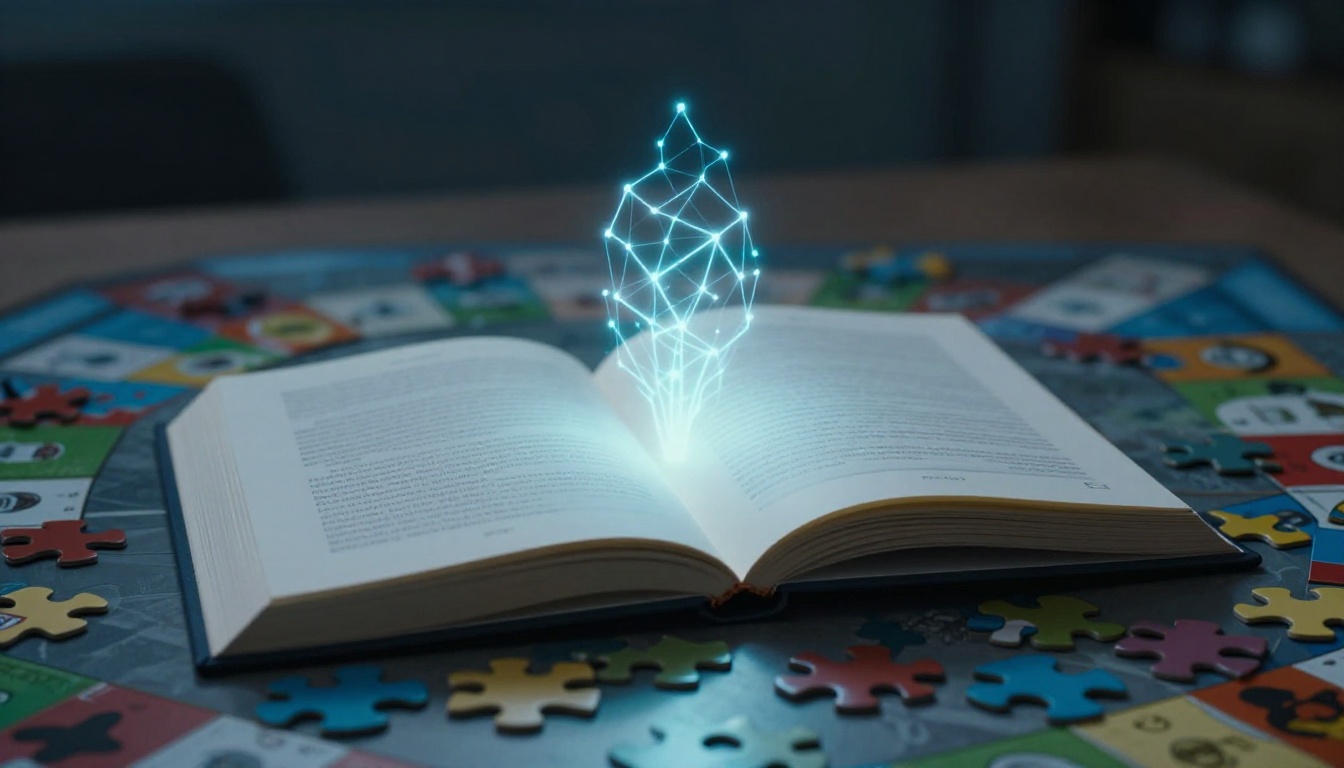
Imagine beating a tough video game level by reading every rule, not by rushing. You notice what the game allows, what it blocks, and how you can win. That same “read the instructions” habit shows up in board games and puzzles, too.
When you follow game instructions improve problem-solving skills, you train your brain to work inside limits. You also learn how to adjust fast when the plan fails. As a result, your focus sharpens, and your thinking can get more creative.
Research from 2023 to 2026 keeps pointing in the same direction. Games tied to clear rules can boost problem-solving, attention, and flexible thinking. Better yet, the benefits show up across ages and game types, as long as you play with intention.
Next, let’s break down why game rules act like a mental workout.
Why Game Rules Turn You into a Sharp Problem Solver
Game instructions usually come in three parts: rules, goals, and steps. Rules set boundaries. Goals give you a target. Steps tell you what actions count.
That structure matters because real problem-solving often works the same way. You need constraints, then a goal, then a path to test. Game instructions basically hand you that whole framework.
For example, in Tetris you cannot place blocks however you want. You must rotate and fit them into gaps. You also need to predict the next shape. So you build pattern recognition, then logic, then a plan.
In Sudoku, the “rules” are even clearer. Each row, column, and 3×3 box must follow strict placement limits. When you solve one cell, it forces changes in other cells. That creates a chain reaction of reasoning, not random guessing.
Studies back this up. A 2025 meta-analysis in Journal of Computer Assisted Learning found digital game-based learning can improve student problem-solving ability. The key is that the games teach you to apply rules, not just press buttons. See Digital game learning meta-analysis (Wiley).
Good instructions don’t remove thinking. They make thinking precise.
As you play more, you stop treating problems as chaos. You start treating them like systems. That mental shift is where problem-solving skills grow.

Mastering Rules Builds Logical Thinking Fast
Rule-following trains you to think in steps. First, you process the rule. Next, you decide how it applies in the moment. Then you test your move and watch what happens.
Chess makes this obvious. Your piece can move only in specific ways. So every move carries logic, not just hope. When you plan a turn, you also plan for the opponent’s reply.
Over time, you learn to spot patterns faster. You see “if this, then that” relationships. You also learn how to rule out bad options quickly.
This transfer shows up in daily tasks, too. At work or school, problems often come with constraints. A deadline, a budget, a rubric, or a process. Once you get used to game rules, you approach those constraints with less stress.
Also, rules help you avoid wild guessing. You stop relying on luck. Instead, you rely on reasoning.
From Instructions to Smart Strategies
Instructions don’t just tell you what you can do. They nudge you toward strategy.
In Monopoly, for instance, the rules shape every choice. You decide where to buy, when to trade, and whether to hold or mortgage. Those decisions reflect the rule system. You learn that strategy means selecting actions that fit the goal and the rules.
Working memory plays a role here. You need to remember steps, exceptions, and temporary states. In games like Angry Birds, you often track the plan in your head. You also track what objects will do after impact.
That mental juggling makes problem-solving feel less random. It becomes more like running a sequence. You predict outcomes, then adjust when the world changes.
And because instructions are consistent, you can build skill without starting from scratch each time. The next challenge feels tough, but it doesn’t feel meaningless.

How Games Train Adaptability and Creative Fixes
Game instructions also create a safe place to fail. In most games, you can retry. That matters because real learning often involves mistakes.
When you restart after a loss, you do something important. You compare your current outcome to the expected one. Then you change one variable.
That quick “test and revise” loop teaches adaptability. It also supports creative fixes, because you stop seeing one approach as the only approach.
In escape-room puzzles, you might try a method, then realize it doesn’t fit. Maybe the lock wants a pattern, not a random attempt. After that, you rethink. You reorganize clues. You test again.
Even action games push flexibility. You adjust your route. You reposition. You try a new timing window. The rules still apply, but your approach changes.
Recent research on game-based learning also suggests that well-designed play improves learning behaviors. Players often show better persistence and better use of strategies than people who use simpler apps.
To see one accessible summary of how play can support problem-solving, check The Power of Play: How Video Games Enhance Problem-Solving Skills in Students.
Quick Feedback Loops That Sharpen Your Edge
Instructions work even better when you get fast feedback. Games usually deliver feedback instantly. Sounds change. Visuals update. Characters respond. Scores rise or fall.
That feedback loop helps you improve without waiting for a grade. So you learn through correction.
World of Warcraft quests are a good example. You try an objective, notice what fails, then adjust your plan. You might change positioning, timing, or item choice after seeing the result.
Over time, these loops train your “next attempt” mindset. You think, “What can I adjust?” instead of, “I’m stuck.”
That mindset helps outside games. In a school project, you can test a draft. In a work task, you can revise based on feedback. In a home fix, you can re-measure and try again.
Boosting Memory, Focus, and Team Play
Instructions demand attention. You must read the rule set and remember it. Then you must keep your attention on the current state of the game.
Sustained focus grows from that demand. Also, games reduce distractions because your “next action” depends on what’s in front of you.
Team play adds another layer. In games like D&D, players follow rules while negotiating roles. You coordinate turn order, track resources, and respond to new info. That helps you practice shared problem-solving.
In addition, many board games force you to hold multiple possibilities in mind. You consider your options, plus the likely options of others. That strengthens mental flexibility.
Most importantly, these skills reinforce each other. Focus supports better memory. Better memory supports faster strategy. Faster strategy supports quicker adaptation.
Real Games and Fresh Research Proving the Gains
Not all games help equally. But instructions matter across formats. The best games give clear rules, a goal, and enough feedback to guide your next move.
Here’s how game instructions connect to problem-solving in common game types.
| Game type | Examples | How instructions improve problem-solving |
|---|---|---|
| Video games | World of Warcraft, Tetris, Angry Birds | Clear objectives plus retries train planning and adaptation |
| Board games | Chess, Monopoly, D&D | Rules create constraints, so strategy requires logic |
| Puzzles | Sudoku, jigsaw, KenKen | Strict patterns teach reasoning and quick error-checking |
Research trends from 2023 to 2026 match these patterns. Video games can support skills like spatial reasoning and processing speed. Board games and puzzles can support executive function and attention.
For older adults, board games may also act as a protective mental exercise. One 2023 systematic review and meta-analysis in Journal of Alzheimer’s Disease looked at whether traditional board games can slow cognitive decline. It’s not a magic fix, but it supports the idea that structured play can help maintain thinking skills. See Board games and cognitive impairment research.
Also, a 2025 CU Boulder study of 1,241 adults reported that gaming most strongly boosted spatial reasoning. Some improvements showed up in processing speed as well. Working memory didn’t always move in the same way. That helps clarify something important: game instructions can train specific skills, not all skills at once.
So you should pick games that match the problem-solving skill you want.
Video Games That Rewrite Your Brain Rules
In many video games, instructions function like a checklist for decision-making.
- World of Warcraft pushes strategy through quests, builds, and timing. You learn to adapt when an approach fails.
- Tetris trains pattern recognition. It also trains speed under constraint.
- Angry Birds develops planning in sequences. You often retry with a new angle or timing.
A big reason this sticks is repetition with meaning. You’re not just replaying. You’re applying rules, then refining your plan.
Board Games and Puzzles for Everyday Wins
Board games make you argue with logic, not with vibes.
Chess teaches you to think ahead. Even when you lose, you learn which threats you missed. Monopoly teaches resource choices under constraints. D&D adds role-play problem-solving with group decision-making.
Puzzles like Sudoku and logic grids push careful reasoning. They train you to scan for what’s allowed, then use that limit to narrow down options.
If you want a readable overview of how word puzzles and board games relate to brain health, this article from Psychology Today summarizes the topic well: Word puzzles and board games boost brain health.
The main takeaway is simple. Clear instructions make thinking measurable. They also help your skills transfer, because many real problems follow rules too.
Apply Game Powers to Solve Real-Life Puzzles
Game instructions don’t belong only in living rooms. You can borrow the same structure for real tasks.
Start by turning your problem into a “game state.” What are the rules? What counts as a win? What constraints do you have?
Then, test a plan like you would in a game. If it fails, don’t quit. Adjust one part. Try again. That’s the core loop that games teach.
Here’s a practical way to apply it:
- Pick one strategy game or puzzle and read the instructions fully before rushing.
- Play consistently, not randomly. Even 20 minutes can work if you track what changes.
- Mix solo and group play. Solo builds self-checking. Group play builds communication and shared thinking.
- Discuss your strategy after each session. Ask, “What rule mattered most?” and “What would I change next?”
For kids, this looks like better test prep and smarter study routines. For adults, it can look like cleaner planning, better task breakdowns, and fewer panic decisions.
Most importantly, you build confidence. When your brain learns it can solve problems inside constraints, it stops fearing new problems.
Conclusion
Game instructions improve problem-solving skills because they train your brain in four key ways: rules, strategy, adaptability, and feedback. You learn to reason inside limits, then adjust when reality disagrees with your plan. Over time, that habit shows up in school, work, and everyday life.
So bring the same mindset you use to beat a hard level. Read the rules closely. Make a plan. Test it, then revise fast. If you do that consistently, your problem-solving gets sharper, and the wins feel earned.
Pick a game today, read the instructions closely, and let your brain practice what real problems demand. What will you try first?