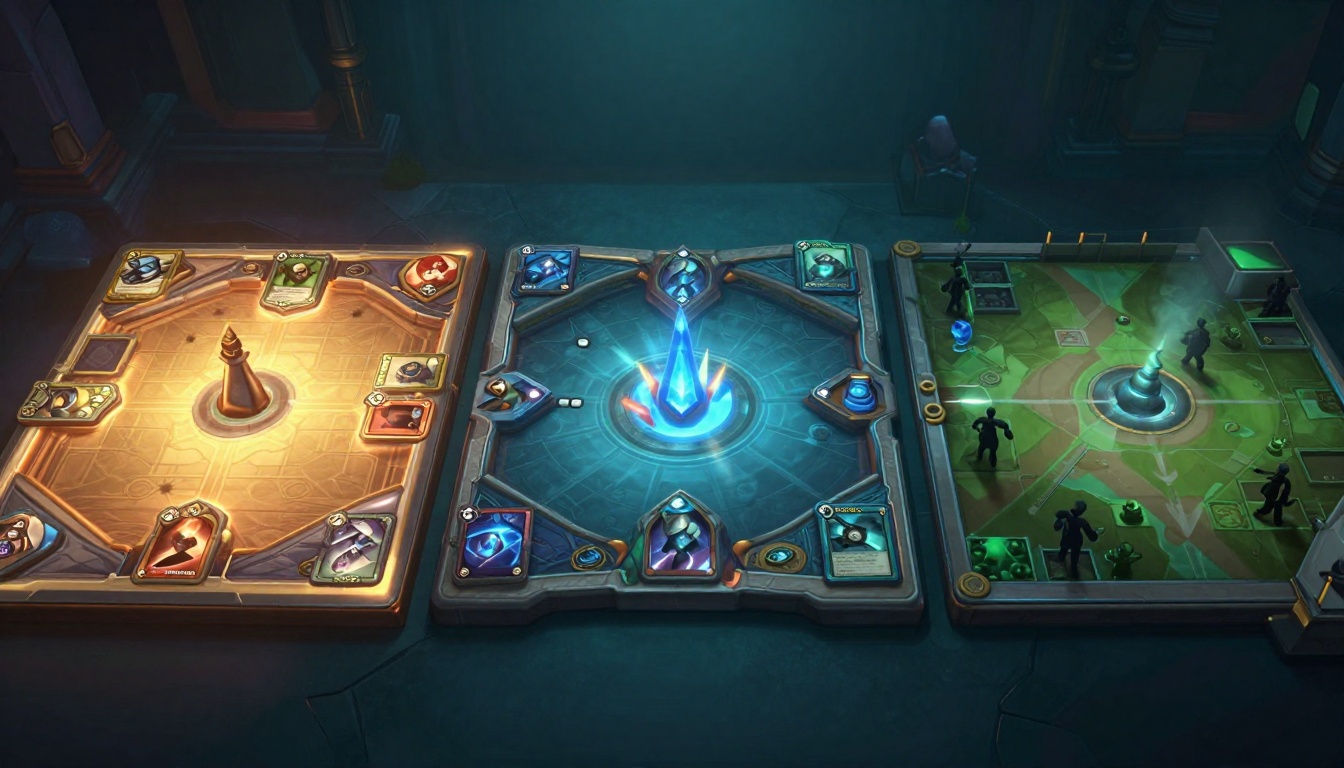
You can lose a game you “understand,” just because you acted at the wrong time. Picture a Hearthstone match where you spend too much early and then hit a wall. Or a Magic: The Gathering turn where you attack before your setup pays off. Those losses don’t come from bad cards alone. They come from ignoring game phases.
Game phases are the stages of play where your best plan changes. Some phases happen inside a single turn, step by step. Other phases describe the whole match, like early, mid, and late. In most strategy games, the rules push both players through the same rhythm. That rhythm decides what “good” looks like at each moment.
Once you spot the phase you’re in, you can choose actions that fit. You’ll plan attacks, save resources, and trade at better times. That matters in turn-based games, card games, board games, and video RTS titles. For example, Magic has strict turn phases like Untap and Combat. Hearthstone uses a simpler flow, but the pacing still matters. In board games, the opening, middlegame, and endgame usually feel different. Even in real-time strategy, the match shifts as your economy grows.
In the sections below, you’ll learn how turn phases work in practice, why phase timing forces smart choices, and how early, mid, and late game goals change your play. You’ll also see real lessons from titles like Magic: The Gathering, Hearthstone, Age of Empires IV, and Manor Lords. Then you’ll leave with a simple set of tactics you can apply right away.
Breaking Down Turn Phases: The Building Blocks of Every Turn
A turn phase is a slice of time with limits. Most games use phases to keep play fair. They also keep your decisions meaningful, because you can’t do everything at once.
In Magic: The Gathering, the turn follows a fixed order. You might think “I want to attack,” but the rules force you to earn the right moment. For a clear breakdown of the full structure, see Magic: The Gathering turn structure.
Here’s what that phase structure looks like in a simple way:
| Game | Turn flow phases | What you usually do |
|---|---|---|
| Magic: The Gathering | Untap, Upkeep, Draw, Main Phase 1, Combat, Main Phase 2, End Step | Refresh resources, draw, set up, then fight |
| Hearthstone | Draw, Play, Attack, End | Build a hand, spend mana, trade units |
| Chess (idea-level) | Opening plan, middlegame plan, endgame plan | Develop pieces, fight for control, then convert |
The key point is planning ahead. Phases limit actions, so timing becomes strategy. If you act too early, you might attack with no protection. If you wait too long, you might miss your best window to pressure.
In Magic, for example, your early phases are about getting cards and mana in a usable state. In Combat, you finally spend that work. That means your “setup” decisions happen long before the fight you care about.
In Hearthstone, it’s less rigid than Magic, but it still matters. You draw, then you choose what to play before attacking. Spending mana badly in the play window often leaves you weak during attacks.
On the board game side, you can feel the same pattern. Chess “phases” aren’t called by the rules the way Magic does. Still, the opening rewards development. The endgame rewards conversion. If you treat the match like one long brawl, you usually lose ground.
Most importantly, phases create a tempo clock. Even when the clock is invisible, it’s there.
Bottom line: turn phases don’t just organize moves. They decide when your plan can actually work.
Why Turn Phases Force Smart Choices
Phase rules push you into decision tradeoffs. You can’t do everything right now. So you must ask a better question: “What should I do with the actions I have this moment?”
In Magic, one classic trap is attacking too soon. Suppose you have a strong creature, but your board has no protection. If you spend your early turn actions on nothing but pressure, you hand your opponent a clean answer. Meanwhile, they use their own phases to draw, play, and set up counters.
In Hearthstone, the same idea shows up as poor mana spending. If you curve badly, you might end up with empty turns. Then your opponent’s units get free attacks during their pressure windows.
Here are a few player scenarios where ignoring phases hurts fast:
Scenario 1: Magic player rushes Combat
- You can draw into answers, but only if you survive the first exchange.
- If you skip setup turns, you enter Combat with fewer options.
Scenario 2: Hearthstone player spends too much early
- You “feel ahead,” but you run out of threats.
- Then the mid game arrives, and your board collapses during attacks.
Scenario 3: RTS player ignores the scout window
- Early in Age of Empires IV, you need information.
- If you skip scouting, you pay later with units you didn’t need.
In each case, phases act like rails. They push the match forward whether you’re ready or not. Your job is to align your plan with where you are on the rails.
Also, phases affect your risk. During early phases, you can often afford imperfect trades. Later phases usually demand sharper moves. So you might choose differently depending on the stage.
That’s why good players don’t just memorize strategies. They time them.
Early, Mid, and Late Game: How Big Phases Change the Whole Match
Turn phases control what you can do in one move. Early, mid, and late game control what you should aim for across the match. Think of it like three different games stitched together.
Early game usually rewards survival plus growth. You protect your economy, grab map control, and set up your core unit plans. Mid game usually rewards expansion and clashes. You fight for territory, tech, and momentum. Late game usually rewards conversion. You trade safer, then you end the match.
A simple way to picture it:
| Match phase | Main goal | Common playstyle | Example |
|---|---|---|---|
| Early (0–30%) | Stay alive, scale economy | scouting, tool-building, safe trades | Age of Empires IV early scouting and tech prep |
| Mid (30–70%) | Take space, win fights | skirmish, push timing windows | Total War campaigns pushing for better forces |
| Late (70%+) | Crush, or defend the win | layered defense, decisive attacks | Manor Lords late conquests and end pressure |
In Age of Empires IV, early pressure often looks like information and forward plans. Later, you add bigger units and stronger timing pushes. You can see similar patterns in games like Total War. Campaign maps build power over time, while battles convert that power in sharper moments.
In Manor Lords, the match also changes as your village grows. Early on, you manage food, housing, and logistics. Mid game brings larger fights and more complex supply needs. Late game asks whether you can sustain pressure while handling weather, travel time, and enemy counterattacks.
So, the phase isn’t just “where you are.” It shapes what your opponent expects. If they’re a slow builder, rushing them mid game might fail. Their early game may have been safe, and their mid game might still be stronger than your aggression.
On the other hand, if you’re a slow builder yourself, you can’t ignore early defense. You just trade one kind of plan for another.
Big gotcha: late game usually punishes “early game mistakes” more than you think.
Spotting Phase Shifts to Stay Ahead
Phase shifts don’t announce themselves with a pop-up. You spot them through patterns.
Here are signs to watch in most strategy games:
- Resource rhythm changes. Food and gold feel different once you hit stable production.
- Board control looks different. Early skirmishes feel like scouting. Later fights decide territory.
- Timings tighten. Timers, cooldowns, and unit windows show up more often mid match.
- Threat density rises. You stop facing one problem at a time, and you start facing systems.
In Hearthstone, one clear phase shift is mana growth. Early turns let you test. Later turns force real board control. If you keep playing like early game, you fall behind on tempo.
In Manor Lords, village size and logistics load help you feel phase change. At first, one missing supply route isn’t fatal. Later, it slows armies and breaks pushes. Weather and travel time can also swing your late game plans, so you can’t treat every push as equal.
In Age of Empires IV, scouting reveals the shift. Early scouting tells you where aggression might come from. Mid game scouting tells you which tech line is online. Late game scouting tells you where your opponent can actually finish a fight.
When you spot the shift, you adapt fast. If you don’t, you’ll keep using tactics that once worked. Then those tactics will turn into mistakes.
The good news: phase reads get easier with practice. Replays help, because you can see the moment when the match stopped being “setup” and became “conversion.”
Game Phases in Action: Lessons from 2026’s Hottest Titles
Modern strategy games often blend ideas. Still, the phase feel stays. You just get new ways for phases to surprise you.
In Manor Lords, early play is economy and stability. You build roads, manage workers, and solve supply bottlenecks before your first big threat. Mid game adds bigger fights and heavier logistics. Late game asks for sustained control, because weather, travel, and reinforcement timing can flip an advantage.
If you want grounded early build ideas, see Manor Lords guide for beginners. It helps you think like a phase player, not a button masher.
In Total War: Warhammer III, campaign growth and battle execution create a strong phase contrast. Your campaign map builds momentum turn by turn. Then each battle either pays off your plan or shatters it. Players often argue about “late game,” but what they really mean is: late game starts when your army quality stops growing by accident and starts growing by design. Steam discussions show how often players struggle with that transition, especially when their tactics don’t match their stage. You can read examples in Total War: WARHAMMER III late game talk.
In Age of Empires IV, scouting and build order choices define your early-to-mid bridge. If you learn when to add units, you’ll fight on timings instead of vibes. A focused example is Age of Empires IV English build order guide. It’s not just about the build, it’s about what you’re preparing for later.
Even Magic: The Gathering maps cleanly onto the idea. Early turns dig in. Mid turns build threats. Combat turns then cash in those investments. If you constantly treat each turn as “the turn to win,” you usually get punished.
So when people say “this game is about tempo” or “this game is about planning,” they’re really pointing at phases. The real skill is switching gears at the right time.
Adapting to Trends Like Hybrid Gameplay
In 2026, many strategy titles mix pacing styles. You might control one phase with turns, then fight with more real-time pressure. Or you might manage an economy in one system, then make battlefield choices in another.
That hybrid setup still follows phase logic. Your timing problem might change, but the core rule stays:
Your early actions must support your later conversion.
Here are practical adjustments when you feel a hybrid shift:
- Treat economy as an early-phase weapon. If you can’t produce units, you can’t win battles, even if you micro well.
- Plan two threats, not one. One threat might work early. The second must work once the match shifts.
- Use scouts to time your first real push. Scouts reduce “random fights” and increase “earned fights.”
Also, hybrids can blur the moment you switch from “setup” to “execution.” So you need a trigger. A trigger could be reaching a tech milestone, finishing housing, or getting your first real army group together.
If you skip that trigger, you risk attacking while you still lack support pieces. That’s when good opponents punish you, fast.
And yes, some players improve by learning the rules. Still, the deeper win comes from learning when the rules matter most. Phases decide that.
Master Any Game Phase with These Proven Strategies
You don’t need a different playbook for every game. You need a phase mindset.
Try these strategies next match, then tweak them after you review your replays.
- Scout early, even when you plan to play safe.
Information turns uncertainty into timing. Then you can choose pressure or defense on purpose. - Pick one job for early game.
Examples include stabilize economy, develop key pieces, or set up card draw. Then ignore side quests. - Make mid game about control, not just fighting.
Win space, win trade routes, or win board lanes. Pure damage often fails once the opponent scales. - Track your “resource cycle,” not only your resources.
Ask how fast you can spend. Ask how fast you can replace what you lose. - Use pressure to force choices, not to win instantly.
When you push at the right phase, you make the opponent answer you during their weakest moment. - Practice phase switches in replays.
Find the exact turn or minute when the match changed. Then ask what you did right before it. - Counter-pick by phase, not by faction or deck.
Some opponents boom early, then strike mid game. Others stabilize mid game, then lock late game. Adjust your plan accordingly.
If you want a Hearthstone-focused example of phase decision patterns, these HearthssGaming tips and tricks can give ideas to test in your own climb practice. Even if you don’t copy every suggestion, it helps you think about decision timing.
Quick takeaway: phases turn “strategy” into a sequence. Your job is to follow that sequence better than your opponent.
Conclusion: Phases Are the Real Reason Matches Flip
That moment when a match swings usually isn’t random. It happens because one player adapted to the new game phase sooner.
Turn phases control what you can do now. Early, mid, and late phases control what you should aim for. When you align your plan with the stage, your actions stop feeling risky. They start feeling earned.
Next time you play, watch for the shift. Then choose a move that fits the stage, not the fantasy of the stage. If you do that, wins stop being luck and start being timing.
So what phase do you struggle with most, early setup, mid clashes, or late conversion? Pick one and improve it in your next match.